Last updated: July 2026
If your credit score has taken a hit — or you’re starting from scratch with little to no credit history at all — a secured credit card is one of the most reliable, lowest-risk tools available for turning things around. Unlike many “bad credit” financial products that come loaded with high fees and predatory terms, a well-chosen secured card can genuinely rebuild your credit history over time, often opening the door to mainstream financial products within a year or two of responsible use.
This guide explains exactly how secured credit cards work, what separates a good one from a bad one, and lays out a step-by-step plan for using one to rebuild your credit score as efficiently as possible.
Disclaimer: This article is for general educational and informational purposes only and does not constitute financial advice. Card terms, deposit requirements, fees, and eligibility criteria vary by issuer and change frequently, so always confirm current details directly with the card issuer before applying. Consider consulting a licensed financial advisor or a nonprofit credit counselor for guidance specific to your situation.
Table of Contents
- What Is a Secured Credit Card?
- How Secured Cards Actually Rebuild Your Credit
- Secured Cards vs. Other Bad-Credit Options
- Key Features to Look For
- Best Secured Cards for a Low Minimum Deposit
- Best Secured Cards for Rewards
- Best Secured Cards With No Credit Check
- Best Secured Cards for a Fast Path to Unsecured
- Best Secured Cards for No Annual Fee
- Step-by-Step: How to Rebuild Your Credit With a Secured Card
- How Long Does It Actually Take to See Results?
- Common Mistakes That Sabotage Your Progress
- When and How to Graduate to an Unsecured Card
- What Happens to Your Deposit?
- Alternatives and Complements to a Secured Card
- Frequently Asked Questions
- Final Thoughts
1. What Is a Secured Credit Card?
A secured credit card works almost identically to a normal, unsecured credit card in every way that matters for your credit report — you make purchases, receive a monthly statement, and are expected to make at least the minimum payment. The key difference is what happens before you’re approved: you put down a refundable cash security deposit, which the issuer holds as collateral in case you stop paying.
That deposit dramatically reduces the risk to the issuing bank, which is why secured cards have such high approval rates compared to unsecured cards marketed to people with damaged or thin credit. In most cases, your deposit amount also determines your credit limit — a $300 deposit typically means a $300 credit limit, though some issuers allow for a higher limit relative to the deposit, or let you choose your own deposit amount within a set range.
Crucially, the deposit isn’t used to pay your bill each month. It exists purely as a backstop; you’re still required to make on-time payments just like you would on any other credit card, and the issuer will only draw from your deposit if you default entirely on the account.
2. How Secured Cards Actually Rebuild Your Credit
Secured cards work because, from the perspective of the credit bureaus, they’re indistinguishable from any other credit card. The security deposit is invisible to your credit report — what shows up is your payment history, your credit utilization, the age of the account, and how the account is reported over time.
This means the same factors that build credit with any card apply here:
- Payment history (the single biggest factor). Making at least the minimum payment on time, every month, is the most important thing you can do.
- Credit utilization. Keeping your balance low relative to your credit limit — ideally under 30%, and under 10% for the strongest impact — signals responsible credit management.
- Length of credit history. The longer an account stays open and in good standing, the more it helps your score, which is one reason to think carefully before closing a secured card once you’ve built it up.
- Credit mix and new credit. A secured card can also diversify your credit mix if you’re building history from scratch, though this factor matters less than payment history and utilization.
The practical result: a secured card used responsibly for six to twelve months can meaningfully improve a damaged or thin credit file, sometimes enough to qualify for an unsecured card or a mainstream loan product.
3. Secured Cards vs. Other Bad-Credit Options
Secured cards aren’t the only path forward if you have bad credit, but they’re generally the most cost-effective and lowest-risk option for most people.
Unsecured cards for bad credit. Some issuers offer unsecured cards specifically marketed to people with damaged credit, without requiring a deposit. These can be convenient, but they often come with higher ongoing APRs and, in some cases, an annual fee that a comparable secured card wouldn’t charge. Because approval doesn’t hinge on a deposit, these cards also tend to carry lower initial credit limits.
Credit-builder loans. Offered by some banks, credit unions, and fintech companies, these products work almost in reverse of a normal loan: you make fixed monthly payments into a locked savings account, and only receive access to the funds once the loan is paid off. They build payment history without the temptation of revolving credit, but don’t help with your credit mix the way a card does.
Becoming an authorized user. If a trusted family member or partner has a credit card in good standing, being added as an authorized user can sometimes boost your credit by inheriting some of that account’s positive history — but this depends entirely on the primary cardholder’s behavior and the issuer’s reporting practices, and it doesn’t teach you the habits of managing your own account.
Rent and utility reporting services. A newer category of services report on-time rent and utility payments to the credit bureaus, which can help build credit passively for people who don’t want to open a new credit account at all, though these services typically don’t move the needle as significantly as a well-managed credit card.
For most people focused on efficiently rebuilding a damaged score, a secured credit card remains the most direct and controllable option, since it reports the same core data points as any mainstream card.
4. Key Features to Look For
Not every secured card is created equal. When comparing options, prioritize:
No annual fee, or a fee low enough to be worth it. Some secured cards charge no annual fee at all, while others charge $25–$40 a year on top of your deposit. If a fee-charging card offers meaningfully better features — rewards, a lower deposit requirement, or a faster upgrade path — it can still be worth it, but compare against no-fee alternatives first.
Reporting to all three major credit bureaus. A secured card is only useful for credit building if it reports to Experian, Equifax, and TransUnion. Confirm this before applying, since not every issuer reports to all three.
A low, affordable minimum deposit. Deposit requirements vary significantly, from as low as $49 on some cards up to $200 or more as the standard starting point. Choose a deposit amount you can comfortably part with for several months to a year without financial strain.
A clear graduation path. The best secured cards offer automatic account reviews after a set period — often around six to seven months — to evaluate whether you qualify for a credit limit increase or an upgrade to an unsecured card, which also means getting your deposit back.
Free credit score access. Many secured cards now include free access to your credit score through the issuer’s app, which makes it easy to track your progress without needing a separate monitoring service.
Rewards, if available. A shrinking-but-real subset of secured cards now offer cash back rewards, which used to be unheard of in this category. This shouldn’t be your top priority when rebuilding credit, but it’s a welcome bonus if a card that meets your other criteria happens to include it.
5. Best Secured Cards for a Low Minimum Deposit
If cash flow is tight, prioritizing a card with the lowest possible minimum deposit can make the difference between being able to get started right away versus having to save up first. Several widely available secured cards allow a starting deposit well under $100, with the option to add more later to increase your credit limit. Cards in this category are especially useful for people rebuilding credit after a financial setback, where every extra dollar tied up in a deposit matters.
6. Best Secured Cards for Rewards
A newer generation of secured cards has begun offering real cash back rewards — something that was essentially nonexistent in this category a decade ago. These cards typically offer a flat cash back rate on all purchases, sometimes with elevated rewards in categories like travel booked through the issuer’s portal. While rewards shouldn’t be the deciding factor when your primary goal is credit repair, a rewards-earning secured card effectively lets you build credit for free while still capturing some value from your everyday spending.
7. Best Secured Cards With No Credit Check
For people with severely damaged credit, a recent bankruptcy, or accounts in collections, even secured cards can sometimes result in a denial based on credit history. A small number of secured card issuers have addressed this by removing the credit check requirement entirely, instead basing approval on other factors like income and, in some cases, not even requiring a traditional bank account. These cards typically come with a modest annual fee and a required minimum deposit, but they offer a genuine path to credit access for people who might otherwise be shut out of every other option.
8. Best Secured Cards for a Fast Path to Unsecured
If your goal is to move off a secured card and onto a mainstream unsecured product as quickly as possible, prioritize issuers known for automatic account reviews on a defined timeline — commonly cited around the seven-month mark for some of the most established programs in this category, though upgrade policies do change over time and aren’t guaranteed. A clear, well-documented graduation path means less guesswork about when you’ll get your deposit back and move on to a standard credit card.
9. Best Secured Cards for No Annual Fee
For most people rebuilding credit, avoiding an annual fee should be a top priority, since a fee eats directly into the value of the card without contributing anything to your credit-building progress. A number of well-established secured cards charge no annual fee at all while still reporting to all three bureaus and offering a reasonable deposit requirement — making them a strong default choice unless another card’s specific features (rewards, no credit check, an especially low deposit) outweigh the value of avoiding the fee entirely.
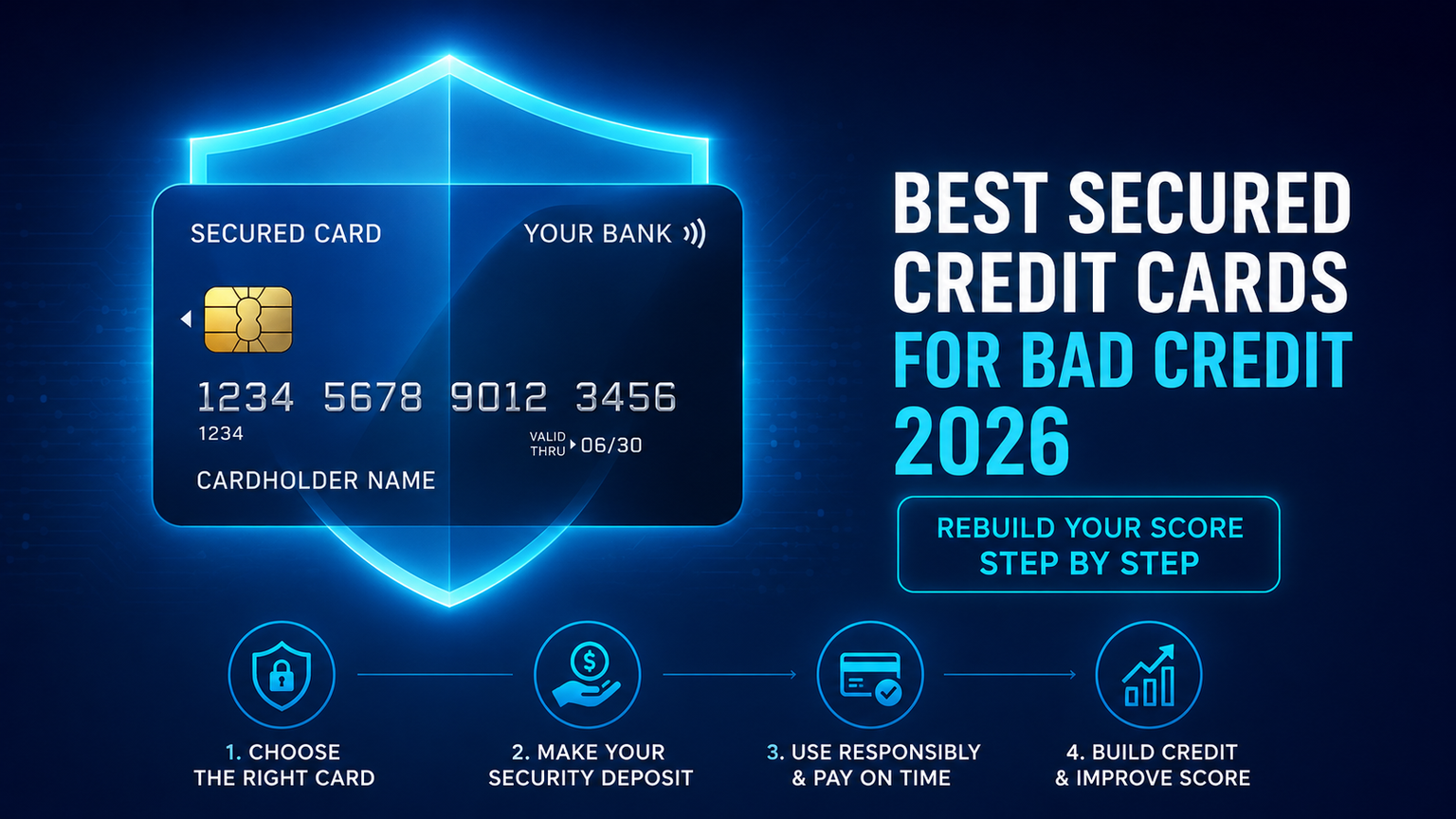
10. Step-by-Step: How to Rebuild Your Credit With a Secured Card
Step 1: Check your current credit reports. Before applying, pull your free credit reports from all three bureaus to understand exactly what’s on your file — old collections, missed payments, high utilization — so you know what you’re working to improve.
Step 2: Choose a card that reports to all three bureaus and fits your budget. Prioritize a deposit amount you can comfortably afford, and confirm there’s no unnecessary annual fee eating into your progress.
Step 3: Make a small, recurring purchase each month. Something predictable — a streaming subscription or a recurring bill — keeps the account active without risking overspending.
Step 4: Pay the statement balance in full, every month, before the due date. This is the single most important habit for credit building. Set up autopay for at least the minimum payment as a safety net, but aim to pay the full balance to avoid interest charges entirely.
Step 5: Keep your utilization low. Even if you’re paying in full, try to keep your balance below 30% of your credit limit at the time your statement closes, since that’s the figure typically reported to the bureaus. Under 10% is even better if you can manage it.
Step 6: Monitor your credit score monthly. Use the free score tracking many secured card issuers provide, or a separate free credit monitoring tool, to watch your progress and catch any errors or fraudulent activity early.
Step 7: Avoid applying for other credit in the meantime. Each new application creates a hard inquiry, which can cause a small, temporary dip in your score. Focus on building a strong history with your secured card before adding more accounts.
Step 8: Request a credit limit increase or graduation review once eligible. Many issuers will proactively review your account after a set period, but it doesn’t hurt to reach out directly if you’ve made six or more consecutive on-time payments and haven’t heard from your issuer.
Step 9: Decide whether to keep the account open after upgrading. Once you’ve built stronger credit, keeping your oldest account open — even at a lower balance — helps your credit history length, which is a positive factor in your score.
11. How Long Does It Actually Take to See Results?
Credit building is a gradual process, and results vary based on your starting point. That said, a general pattern holds for most people using a secured card responsibly:
- First 1–3 months: The account appears on your credit report and begins establishing payment history. Score movement is usually minimal this early.
- 3–6 months: Consistent on-time payments and low utilization typically begin producing noticeable score improvements, especially for people starting with a thin credit file.
- 6–12 months: Many issuers conduct their first formal review around this point, potentially offering a credit limit increase or an upgrade to an unsecured card. Scores for people who started with genuinely poor credit (rather than simply thin credit) often see meaningful, sustained improvement by this stage.
- 12+ months: With continued responsible use, most people see their score stabilize in a healthier range, opening up access to better rates on loans, mainstream unsecured cards, and other financial products.
These timelines are general patterns, not guarantees — individual results depend heavily on what else is on your credit report, including any existing negative marks that may still be aging off over time.
12. Common Mistakes That Sabotage Your Progress
Missing payments. Even one late payment can meaningfully set back your progress, since payment history carries the most weight of any credit factor. Set up autopay immediately after approval.
Maxing out the card. Using your entire credit limit each month, even if you pay it off, can result in a high utilization ratio being reported before your payment posts. Keep spending well below your limit.
Applying for a card you can’t get approved for. Some secured cards still run a credit check, and applying for multiple cards in a short window can create unnecessary hard inquiries. Research a card’s approval criteria before applying.
Treating the deposit as spending money. Remember that the deposit is collateral, not a prepaid balance — you still need to pay your bill separately, even though you’ve already put down cash upfront.
Closing the account too early. Closing your first secured card shortly after upgrading can shorten your average credit history length, which works against you. Consider keeping the account open if there’s no annual fee working against you.
Ignoring your credit reports for errors. Errors on credit reports are more common than most people realize. Dispute any inaccurate information you find, since an error dragging down your score can undo months of otherwise positive progress.
Giving up too early. Credit building is slow by design. A few months without dramatic score movement doesn’t mean the strategy isn’t working — consistency over six to twelve months is what actually moves the needle.
13. When and How to Graduate to an Unsecured Card
Most secured card issuers will either automatically review your account after a set period of responsible use or allow you to request a review yourself. A successful graduation typically results in one of two outcomes: your existing secured card converts to an unsecured version (with your deposit refunded), or you become eligible to apply for a separate unsecured card from the same issuer, sometimes with a smoother approval path due to your existing banking relationship.
Before requesting an upgrade, make sure you have:
- At least six consecutive months of on-time payments
- Consistently low credit utilization
- No other new derogatory marks that have appeared on your credit report since opening the secured card
If your issuer doesn’t offer an automatic graduation path, it’s reasonable to apply for a separate unsecured card once your score has meaningfully improved, while deciding separately whether to keep the original secured card open for its contribution to your credit history length.
14. What Happens to Your Deposit?
Your security deposit is refundable, but the timing and process for getting it back vary depending on the situation:
- If you graduate to an unsecured card, most issuers refund the deposit automatically once the account converts, since it’s no longer needed as collateral.
- If you close the account voluntarily, your deposit is typically refunded after the closing balance is paid in full, though processing can take a few weeks.
- If you default on the account, the issuer can use the deposit to cover the outstanding balance, and you’ll only receive any remaining amount after that balance is settled.
It’s worth keeping documentation of your deposit and monitoring your statements closely, particularly around the time you close or upgrade an account, to make sure the refund is processed correctly and promptly.
15. Alternatives and Complements to a Secured Card
A secured card doesn’t have to be the only tool in your credit-building strategy. Consider pairing it with:
- A credit-builder loan, which builds a different type of payment history and can diversify your credit mix
- Rent and utility payment reporting services, which can add positive payment history for expenses you’re already paying anyway
- Free credit monitoring tools, which help you catch errors and fraud early, both of which can otherwise undo months of progress
- A written budget that accounts for your card payment as a fixed monthly obligation, reducing the risk of a missed payment during a tight month
None of these replace the core habit that actually rebuilds credit — consistent, on-time payments over an extended period — but they can support and reinforce that habit as part of a broader financial plan.
15b. Common Myths About Secured Cards and Credit Repair
Misinformation is everywhere when it comes to credit repair, and some of it can actively work against you. Here are a few persistent myths worth clearing up.
Myth: Carrying a balance improves your credit score. This is one of the most damaging misconceptions in personal finance. Your credit score doesn’t care whether you carry a balance — it only cares whether you pay on time and keep utilization low. Carrying a balance costs you interest with zero credit benefit.
Myth: Checking your own credit score hurts it. Checking your own score or report is considered a “soft inquiry” and has no impact on your credit whatsoever. Only hard inquiries from lenders reviewing a new application can cause a small, temporary dip.
Myth: You need a secured card forever to keep your credit good. A secured card is a stepping stone, not a permanent requirement. Once you’ve built a positive history, you can graduate to unsecured products and continue building credit through normal card use.
Myth: All secured cards are essentially the same. As covered above, secured cards vary significantly in deposit requirements, fees, rewards, credit check requirements, and graduation policies. Treating them as interchangeable can mean paying unnecessary fees or missing out on a faster path to an unsecured card.
Myth: Paying off collections immediately erases them from your report. Paying a collection account can improve your standing with future lenders and, under newer scoring models, may reduce its negative impact — but the account can still remain on your credit report for up to seven years from the original delinquency date, even after it’s paid.
Myth: A single missed payment will permanently ruin your credit. A single late payment does hurt, particularly if it’s reported as 30 or more days past due, but its impact fades over time with consistent positive payment history afterward. It’s a setback, not a permanent sentence.
15c. The Behavioral Side of Rebuilding Credit
Credit repair is often discussed purely in mechanical terms — pay on time, keep utilization low — but the behavioral side matters just as much as the technical side. A few practices that consistently help people stick with the process:
Automate everything you can. Autopay for at least the minimum payment removes the single biggest risk factor: forgetting a due date during a busy or stressful month.
Use the card for something you’d pay for anyway. Tying your secured card to a recurring bill you already budget for — a streaming subscription, a phone bill — keeps the account active without tempting you into new discretionary spending.
Set a hard personal utilization rule. Rather than tracking a percentage in your head each month, some people find it easier to set a hard dollar cap well below their limit and simply not spend past it.
Track progress somewhere visible. Whether it’s a spreadsheet, a note on your phone, or the free score tracker built into your card’s app, seeing your score move — even slowly — reinforces the habits that are driving the improvement.
Expect plateaus. Credit scores don’t move in a straight line. A few months of little visible change doesn’t mean the strategy has stopped working; it often reflects how scoring models weigh account age and payment history over longer windows.
16. Frequently Asked Questions
Will a secured card hurt my credit if I apply and get denied? A denied application can still result in a hard inquiry if the issuer runs a credit check, causing a small, temporary dip in your score. Look for issuers with pre-qualification tools, or no-credit-check secured cards, if you’re concerned about your approval odds.
How much should I put down as my security deposit? Put down an amount you’re comfortable having tied up for several months to a year, while still giving yourself a credit limit high enough to keep your utilization low with normal spending. A deposit in the $200–$300 range is a common starting point for many issuers, though lower options exist.
Can I get my deposit back at any time? Generally, yes — closing the account (after paying off any balance) or graduating to an unsecured card will result in your deposit being refunded, though processing times vary by issuer.
Do secured cards charge higher interest rates than regular cards? Secured cards can carry APRs comparable to, or sometimes higher than, average unsecured cards, but this matters far less than it might seem if you pay your statement balance in full every month, since you won’t be charged interest at all.
Is it better to get a secured card or an unsecured card for bad credit? For most people, a secured card offers a lower overall cost and a clearer path to graduation, since unsecured cards marketed to bad-credit applicants often carry higher fees and lower limits without the deposit acting in your favor.
How many secured cards should I have at once? One is generally enough for credit-building purposes. Opening multiple secured cards at once ties up more deposit money than necessary and creates multiple hard inquiries without meaningfully speeding up your progress.
Can a secured card help someone with no credit history at all, not just bad credit? Yes. Secured cards work just as well for establishing credit from scratch as they do for repairing damaged credit, since the underlying mechanism — reporting responsible payment history to the bureaus — is the same either way.
17. Final Thoughts
A secured credit card isn’t a shortcut, and it won’t repair years of credit damage overnight. What it offers instead is something more valuable: a reliable, low-risk, fully controllable path to demonstrating exactly the kind of behavior that credit scoring models reward — on-time payments and low utilization, sustained consistently over time.
The specific card you choose matters less than how you use it. A no-fee card with a modest deposit, used for one or two small recurring purchases and paid off in full every single month, will do more for your credit than a flashier card used carelessly. Stay consistent, monitor your progress, and treat the first six to twelve months as a foundation-building phase rather than a race — the mainstream financial products you’re working toward will be there once your credit history reflects the responsible habits you’re building today.
This article is for general informational purposes only and is not financial advice. Card offers, deposit requirements, fees, and terms change frequently — always verify current details on the issuer’s official website before applying, and consider speaking with a nonprofit credit counselor for guidance specific to your situation.