Introduction
Few things can quietly drain a travel budget faster than foreign transaction fees. Most standard credit cards charge an additional fee, typically around 3%, on every purchase made outside your home country, which means a $3,000 international trip could cost an extra $90 or more simply for the privilege of using the wrong card. Beyond fees, the right travel credit card can also provide meaningful protection when things go wrong abroad, from trip cancellations and delayed flights to lost luggage and rental car mishaps.
Choosing the right card for international travel in 2026 means looking beyond flashy rewards rates and focusing on a few essential factors: whether the card charges foreign transaction fees, what kind of travel protections it includes, how well it is accepted internationally, and whether its rewards structure actually matches how you travel. This guide walks through the best options across several categories, from no-annual-fee cards perfect for occasional travelers to premium cards packed with lounge access and comprehensive insurance for those who spend much of the year abroad.
Why Foreign Transaction Fees Matter More Than You Think
A foreign transaction fee is a surcharge applied by a card issuer whenever a purchase is processed in a foreign currency or routed through a foreign bank, even if the purchase itself is priced in U.S. dollars. This fee typically adds around 3% to the cost of every international purchase, which can add up significantly over the course of even a modest trip.
Most major card issuers charge this fee on at least some of their cards, though it is generally waived on their more travel-focused, premium products. A smaller number of issuers, including Capital One, have gone further and eliminated foreign transaction fees across their entire card lineup, including some no-annual-fee options, making them a particularly strong choice for travelers who don’t want to pay an annual fee just to avoid this extra cost.
It’s worth distinguishing a foreign transaction fee from a currency conversion markup. Even cards that waive foreign transaction fees still convert your purchase using an exchange rate set by the card network, typically Visa or Mastercard, which is usually very close to the wholesale exchange rate and rarely includes a meaningful hidden markup. This is different from certain other financial products, such as some debit cards or older-style traveler’s checks, which may apply a less favorable rate.
What to Look For in a Travel Credit Card
Before diving into specific card recommendations, it helps to understand the core criteria that separate a genuinely strong international travel card from an average one:
No foreign transaction fee. This should be considered a baseline requirement for any card you plan to use abroad, since the fee erodes the value of any rewards you might otherwise earn.
Wide acceptance. Visa and Mastercard tend to be the most widely accepted card networks internationally, particularly across much of Europe, while American Express and Discover, though improving, are still accepted at a smaller number of merchants in many countries. If you plan to rely heavily on a single card abroad, a Visa or Mastercard can offer more peace of mind, though carrying a backup card on a different network is generally a wise practice regardless.
Travel and purchase protections. Look for benefits such as trip cancellation and interruption insurance, baggage delay and loss coverage, rental car collision protection, and emergency travel assistance. These protections can end up saving significant money if a flight is canceled, luggage goes missing, or a rental car is damaged.
Rewards that match your travel habits. Some cards offer a flat rate on every purchase, which is simple and predictable, while others offer higher rates specifically on travel and dining purchases, which can be more valuable for frequent travelers who spend heavily in those categories.
Reasonable annual fee, if any. Premium travel cards often charge a meaningful annual fee, but many include travel credits, lounge access, or other perks that can offset or even exceed that cost for frequent travelers. Occasional travelers may be better served by a no-annual-fee card that still eliminates foreign transaction fees.
Best Overall Premium Card: Chase Sapphire Reserve
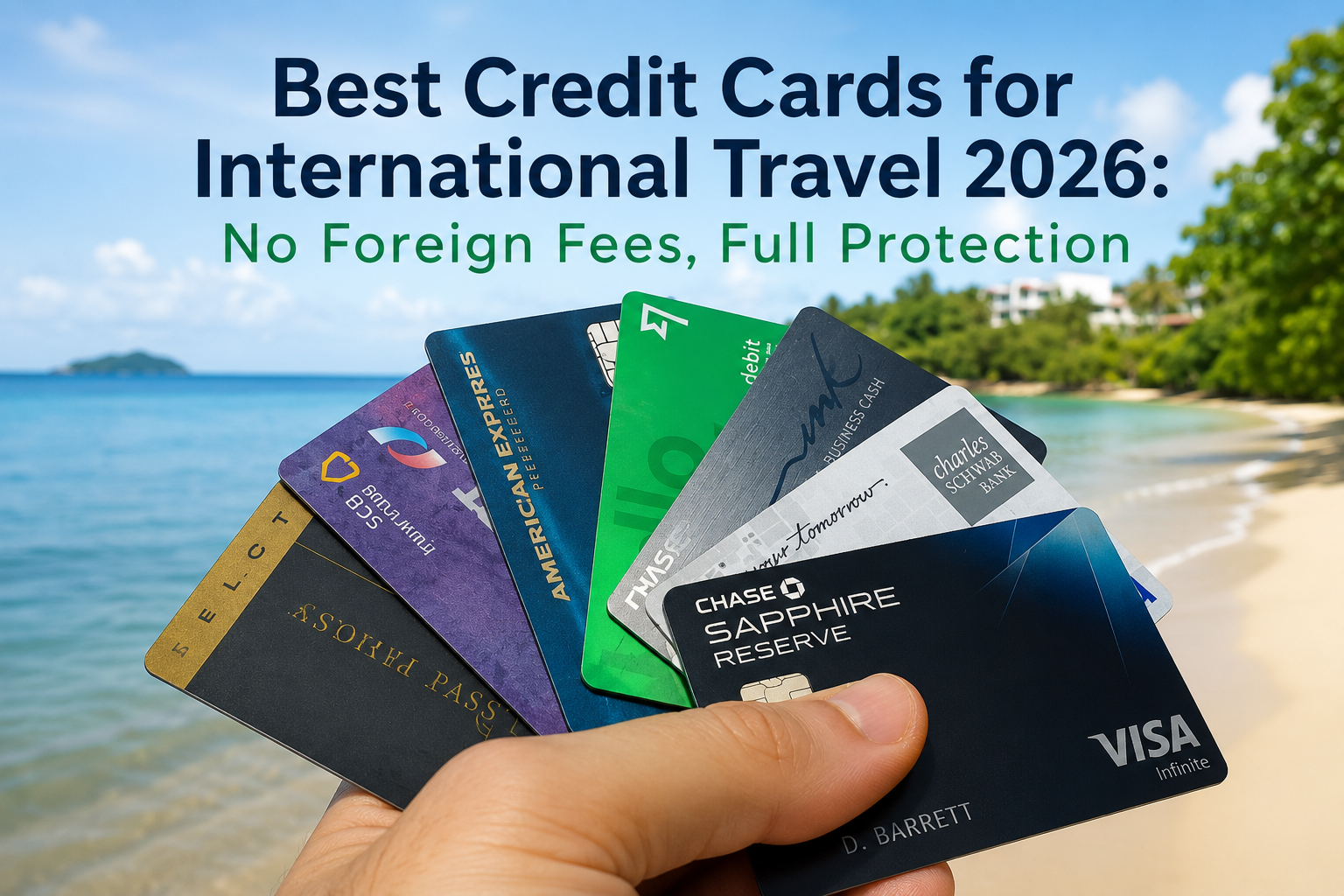
For travelers who spend a significant portion of the year abroad and want the most comprehensive set of benefits available, a top-tier premium travel card like the Chase Sapphire Reserve remains one of the strongest options on the market. These flagship-level cards typically combine elevated rewards rates on travel and dining, a substantial annual travel credit that can meaningfully offset the card’s annual fee, complimentary airport lounge access, and a robust suite of travel protections including trip cancellation and interruption insurance, rental car coverage, and baggage protection.
The annual fee on cards in this tier is significant, often several hundred dollars, so this category makes the most sense for travelers who fly frequently enough to make full use of the included travel credits and lounge access. For those who travel abroad only occasionally, the ongoing value may not fully justify the cost compared to a mid-tier alternative.
Best Mid-Tier Option: Chase Sapphire Preferred
For travelers who want strong travel benefits without committing to a top-tier annual fee, mid-tier cards like the Chase Sapphire Preferred strike a compelling balance. These cards typically charge a moderate annual fee, often under $100, while still offering no foreign transaction fees, solid rewards rates on travel and dining, and a meaningful set of travel protections such as trip cancellation and interruption insurance, rental car damage coverage, and baggage delay protection.
Cards in this tier also frequently allow points to be transferred to a range of airline and hotel loyalty partners, which can unlock outsized value compared to simply redeeming points for cash back, particularly for travelers willing to research award availability and transfer ratios. This makes the mid-tier category an excellent “entry point” into more strategic points-based travel redemptions, without the steep cost of a flagship premium card.
Best for Lounge Access and Luxury Perks: Premium Charge Cards
For travelers who prioritize airport lounge access above nearly everything else, premium charge cards such as the American Express Platinum Card remain among the strongest options available. These cards typically provide access to an extensive global network of airport lounges, along with a range of additional luxury travel perks such as elite hotel status, statement credits for specific travel purchases, and concierge services.
The trade-off is a substantial annual fee, often among the highest in the industry, meaning this category is generally best suited to travelers who fly often enough, and value lounge access highly enough, to make full use of the benefits. For less frequent travelers, the annual fee can be difficult to justify compared to a mid-tier travel card offering more modest but still valuable protections.
Best Premium Travel Card Outside the Chase Ecosystem: Capital One Venture X
For travelers who want a premium travel experience without being tied to a specific airline or hotel loyalty ecosystem, cards like the Capital One Venture X Rewards Credit Card offer a compelling alternative. These cards typically combine a strong flat rewards rate on general purchases with even higher rates on travel booked through the issuer’s own travel portal, along with lounge access, a meaningful annual travel credit, and comprehensive travel insurance protections.
Because rewards earned on cards in this category can often be transferred to a wide range of airline and hotel partners, travelers gain considerable flexibility in how they redeem their points, without being limited to a single major airline alliance or hotel chain. This flexibility, combined with a strong protection suite, makes this category particularly appealing to travelers who value simplicity and broad redemption options over deep loyalty to a single airline or hotel brand.
Best No-Annual-Fee Option for Simple Travel Rewards: Capital One VentureOne
Not every traveler wants to pay an annual fee, and fortunately, several strong no-annual-fee options exist that still eliminate foreign transaction fees entirely. Cards like the Capital One VentureOne Rewards Credit Card offer a straightforward flat rewards rate on every purchase, with a higher rate specifically on hotels and rental cars booked through the issuer’s travel portal, all without charging an annual fee.
This category is ideal for travelers who want simple, dependable rewards without needing to track categories or pay ongoing fees, though it’s worth noting that no-annual-fee travel cards generally include fewer premium protections, such as lounge access or extensive travel insurance, compared to their annual-fee counterparts.
Best No-Annual-Fee Cash Back Option: Capital One Quicksilver
For travelers who would rather earn straightforward cash back than travel-specific points, no-annual-fee cash back cards that also waive foreign transaction fees, such as the Capital One Quicksilver Cash Rewards Credit Card, offer a simple and dependable option. These cards typically earn a flat cash back rate on every purchase, with no bonus categories to track, making them especially appealing to budget-conscious travelers who prioritize simplicity over maximizing travel-specific redemption value.
While cards in this category generally lack dedicated travel protections like trip insurance or rental car coverage, they remain an excellent lower-cost complement to a more benefits-rich travel card, particularly for travelers who want a reliable backup card that won’t add foreign transaction fees to their spending abroad.
Best Alternative Points Currency: Bilt Mastercard
For travelers looking for a no-annual-fee card with a genuinely flexible points system, the Bilt Mastercard has carved out a distinctive niche. In addition to earning points on everyday spending, including an unusual ability to earn points on rent payments without a transaction fee, this type of card typically offers elevated rewards on travel and dining, along with the ability to transfer points to a range of airline and hotel loyalty partners. Combined with no foreign transaction fee, this makes it a strong option for travelers who want flexible, transferable rewards without paying an annual fee.
Best for Hotel Loyalists: Co-Branded Hotel Cards
Frequent travelers who consistently stay with a specific hotel chain may find more value in a co-branded hotel credit card than a general travel rewards card. Cards like the Marriott Bonvoy Boundless Credit Card typically offer automatic elite status within that hotel chain’s loyalty program, along with elevated rewards on hotel stays and a reasonable annual fee compared to premium general travel cards. For loyalists who already plan to stay within a specific hotel brand’s network internationally, this type of card can deliver outsized value through complimentary upgrades, late checkout, and other elite benefits, in addition to the standard protection of having no foreign transaction fee.
Understanding Travel Protections in More Detail
Trip Cancellation and Interruption Insurance
This benefit typically reimburses non-refundable trip costs if a trip is canceled or cut short due to a covered reason, such as illness, severe weather, or other qualifying events. Coverage limits and covered reasons vary by card, so it’s worth reviewing the specific benefit guide for any card before relying on it heavily.
Baggage Delay and Lost Luggage Coverage
Many travel-focused cards include reimbursement for essential purchases, such as clothing and toiletries, if checked baggage is significantly delayed, as well as coverage in the event that luggage is lost entirely. This benefit can provide meaningful peace of mind for international trips where lost luggage may be more difficult and time-consuming to resolve directly with an airline.
Rental Car Insurance
Many travel credit cards include some form of rental car collision damage coverage when the rental is paid for with that card and any rental company collision waiver is declined. This benefit can eliminate the need to purchase a separate, often expensive, collision waiver directly through the rental car company, though it’s important to confirm whether the coverage is primary or secondary, and whether it applies in the specific country you’re renting in, since terms can vary internationally.
Emergency Travel Assistance
Premium travel cards often include access to emergency assistance services, which can help travelers coordinate emergency medical care, replace lost documents, or arrange emergency transportation while abroad. While this benefit is less commonly used than baggage or rental car protections, it can be invaluable in a genuine emergency situation far from home.
Purchase Protections
Beyond travel-specific benefits, many of these same cards also include broader purchase protections such as extended warranties and price protection, which can provide additional value well beyond the context of a single trip.
Matching the Right Card to Your Travel Style
The Occasional Traveler
If you travel internationally once or twice a year, a no-annual-fee card that eliminates foreign transaction fees is usually the most sensible choice. You’ll avoid the 3% surcharge on every purchase without paying an ongoing fee for benefits you may not use often enough to justify.
The Frequent Leisure Traveler
If you travel abroad multiple times a year for vacations, a mid-tier travel card with a moderate annual fee often delivers the best overall value, combining meaningful travel protections and elevated rewards rates with an annual fee that’s easier to justify through regular use of its included travel credit and rewards.
The Frequent Business or Luxury Traveler
If you travel abroad regularly, particularly for business, and place a high value on airport lounge access and premium protections, a top-tier premium card or luxury charge card can deliver substantial value despite its high annual fee, provided you consistently use the included credits and lounge access.
The Budget-Conscious Traveler
If your primary concern is simply avoiding extra fees while keeping costs low, a no-annual-fee cash back or simple flat-rate travel card offers a dependable, low-maintenance option, even if it lacks the deeper protections found on premium cards.
The Loyalty-Driven Traveler
If you consistently stay with one hotel chain or fly one airline internationally, a co-branded card tied to that specific loyalty program can often deliver more practical value, through elite status and category-specific bonus rewards, than a general-purpose travel card.
A Few Practical Tips for Using Cards Abroad
Notify your card issuer before traveling, if required. While many issuers no longer require advance travel notifications, it’s still worth checking your specific card’s policy to avoid having a legitimate international purchase flagged as suspicious activity.
Always choose to be charged in the local currency, not U.S. dollars. When a foreign merchant or ATM offers to charge your card in U.S. dollars instead of the local currency, a practice known as dynamic currency conversion, declining and choosing the local currency will almost always result in a better exchange rate.
Carry a backup card on a different network. Because acceptance can vary by country and merchant, carrying both a Visa or Mastercard alongside any American Express or Discover card can help ensure you’re never without a working payment method.
Keep your card issuer’s international contact number accessible. In the event your card is lost, stolen, or unexpectedly declined abroad, having quick access to your issuer’s international support line can help resolve the issue faster than relying solely on a domestic customer service number.
Review your specific benefits guide before you travel. Because exact terms, coverage limits, and included perks vary by card and can change over time, reviewing your card’s current benefits guide before a major trip ensures you understand exactly what protections you have, and how to use them if something goes wrong.
Quick Comparison: Top Picks by Category
| Category | Best For | Annual Fee Range | Foreign Transaction Fee | Key Strength |
|---|---|---|---|---|
| Top-tier premium travel card | Frequent flyers wanting maximum benefits | High (several hundred dollars) | None | Elevated travel/dining rewards, lounge access, large travel credit |
| Mid-tier travel card | Regular leisure travelers | Moderate (under $100) | None | Strong protections and transferable points at a manageable cost |
| Luxury charge card | Lounge access priority | Very high | None | Extensive global lounge network, elite perks |
| Flexible premium card outside major ecosystems | Travelers wanting broad transfer options | High | None | Strong flat rate plus flexible transfer partners |
| No-annual-fee travel card | Occasional travelers | None | None | Simple flat rewards with no ongoing cost |
| No-annual-fee cash back card | Budget-conscious travelers | None | None | Straightforward cash back, no categories |
| Alternative points card | Renters and flexible spenders | None | None | Earns on rent, transfers to multiple partners |
| Co-branded hotel card | Hotel loyalists | Moderate | None | Automatic elite status and hotel-specific perks |
Credit Profile Considerations
Most of the cards discussed above, particularly premium travel cards and mid-tier options with transferable points, are generally geared toward applicants with good to excellent credit. Approval odds, credit limits, and the specific ongoing APR offered to an approved applicant will vary based on individual creditworthiness, income, and existing relationship with the issuer.
For travelers who are still building credit, no-annual-fee cash back cards that waive foreign transaction fees can be a more attainable starting point, since some issuers extend this benefit even to cards designed for applicants with fair credit. Building a strong payment history on an entry-level card can help position a traveler for approval on a more rewards-rich premium travel card down the line, once their credit profile has strengthened.
It’s also worth being aware that some major issuers have specific application policies that can affect approval odds for applicants who have opened a large number of new credit accounts across any issuer within a recent period, regardless of credit score. Researching a specific issuer’s current application policies before applying can help avoid an unnecessary denial, particularly for travelers hoping to add a premium travel card to their wallet ahead of a specific trip.
How Many Travel Cards Do You Actually Need?
It’s tempting to assume that more cards automatically means more rewards, but for most travelers, a focused strategy built around one or two well-chosen cards delivers more practical value than juggling a large stack of cards with overlapping benefits. A common and effective approach is pairing one no-annual-fee card that eliminates foreign transaction fees, used as a reliable backup, with a single mid-tier or premium travel card that matches your typical travel frequency and provides the bulk of your protections and elevated rewards.
Travelers who fly very frequently, or who consistently stay loyal to a specific airline or hotel chain, may find it worthwhile to add a co-branded card into that mix specifically for the elite status and category-specific perks it unlocks. Beyond that, adding additional cards mainly for marginal rewards differences often introduces more complexity, in the form of tracking multiple annual fees and benefit renewal dates, than the incremental value justifies for most travelers.
Common Mistakes Travelers Make With Credit Cards Abroad
Assuming every card in a premium lineup waives foreign transaction fees. Some issuers charge foreign transaction fees on their entry-level or co-branded cards even while waiving them on flagship travel products. Always confirm the specific fee policy for your exact card rather than assuming based on the issuer’s broader reputation.
Redeeming points for cash back without checking transfer value first. Many travel rewards points are worth meaningfully more when transferred to an airline or hotel partner and used for an award redemption than when simply cashed out at a flat rate. Before redeeming a large points balance, it’s worth briefly checking whether a transfer partner redemption would offer better value for an upcoming trip.
Ignoring included travel credits. Premium cards often include annual credits for specific travel purchases, such as a general travel credit or a fee reimbursement for trusted traveler programs. Failing to use these credits before they reset each year effectively leaves free money on the table, and can make an otherwise expensive annual fee feel far less burdensome.
Not understanding rental car coverage details before declining the rental company’s insurance. Some card-provided rental car coverage is secondary to your personal auto insurance, some is primary, and some may exclude certain countries or vehicle types entirely. Confirming these details before declining a rental company’s own collision waiver can prevent an unpleasant surprise if a damage claim arises.
Overlooking purchase notification requirements. While most issuers no longer require formal travel notifications, a small number of purchases in unfamiliar international locations can still occasionally trigger a fraud hold. Keeping your issuer’s international support number saved can help resolve this quickly if it happens.
Frequently Asked Questions
Do all credit cards charge foreign transaction fees? No. While many standard credit cards do charge a foreign transaction fee, typically around 3%, a growing number of cards, including many travel-focused and some no-annual-fee cards, waive this fee entirely.
Is it better to use a credit card or debit card internationally? Credit cards generally offer stronger fraud protection and more valuable travel benefits than debit cards, and using a credit card rather than withdrawing cash from a foreign ATM also helps avoid additional ATM and foreign transaction fees that often apply to debit card withdrawals abroad.
Are Visa and Mastercard accepted everywhere internationally? Visa and Mastercard are the two most widely accepted card networks internationally, particularly across Europe, while American Express and Discover are accepted at a smaller, though growing, number of international merchants.
Do no-annual-fee cards include travel insurance? Generally, no-annual-fee cards offer more limited travel protections compared to annual-fee travel cards, though they can still eliminate foreign transaction fees, which remains one of the most important protections for cost-conscious international travelers.
What’s the difference between a foreign transaction fee and a currency conversion fee? A foreign transaction fee is a surcharge added by your card issuer for processing an international purchase, while currency conversion refers to the exchange rate applied to convert that purchase into your home currency. Cards that waive the foreign transaction fee still use a currency conversion rate, but this rate is generally very close to the wholesale exchange rate and does not typically include a significant additional markup.
Should I choose a card based on rewards or protections? Ideally, both. The best international travel card for your situation balances rewards that match your actual spending habits with protections that address realistic travel risks, such as trip cancellations, baggage delays, and rental car damage, rather than focusing on one factor exclusively.
Conclusion
Choosing the right credit card for international travel in 2026 comes down to matching your travel frequency, spending habits, and risk tolerance to the right combination of fees, rewards, and protections. Occasional travelers can do very well with a simple, no-annual-fee card that eliminates foreign transaction fees, while frequent travelers may find that a mid-tier or premium travel card’s annual fee is easily justified by its travel credits, lounge access, and comprehensive protections.
Regardless of which tier fits your travel habits best, the single most important baseline requirement remains the same: avoid using a card abroad that charges a foreign transaction fee. From there, layering on the right travel protections and a rewards structure that matches how you actually spend will ensure your card works as hard for you abroad as it does at home.
Before your next international trip, take a few minutes to double-check three things: that your primary card genuinely waives foreign transaction fees, that you understand exactly what travel protections it includes and how to use them, and that you’re carrying a backup card on a different network in case your primary card is ever declined, lost, or flagged abroad. That small amount of preparation is often the difference between a trip where your credit card quietly saves you money and provides peace of mind, and one where an avoidable fee or an unused benefit ends up costing you more than it should have.
This article is for informational purposes only and does not constitute financial advice. Credit card terms, fees, rewards rates, and included benefits are subject to change and can vary by issuer, card version, and individual creditworthiness. Always review the current, official terms and conditions directly from the issuer before applying for or relying on the benefits of any credit card.