Introduction: Earning the Nickname “The People’s Exchange”
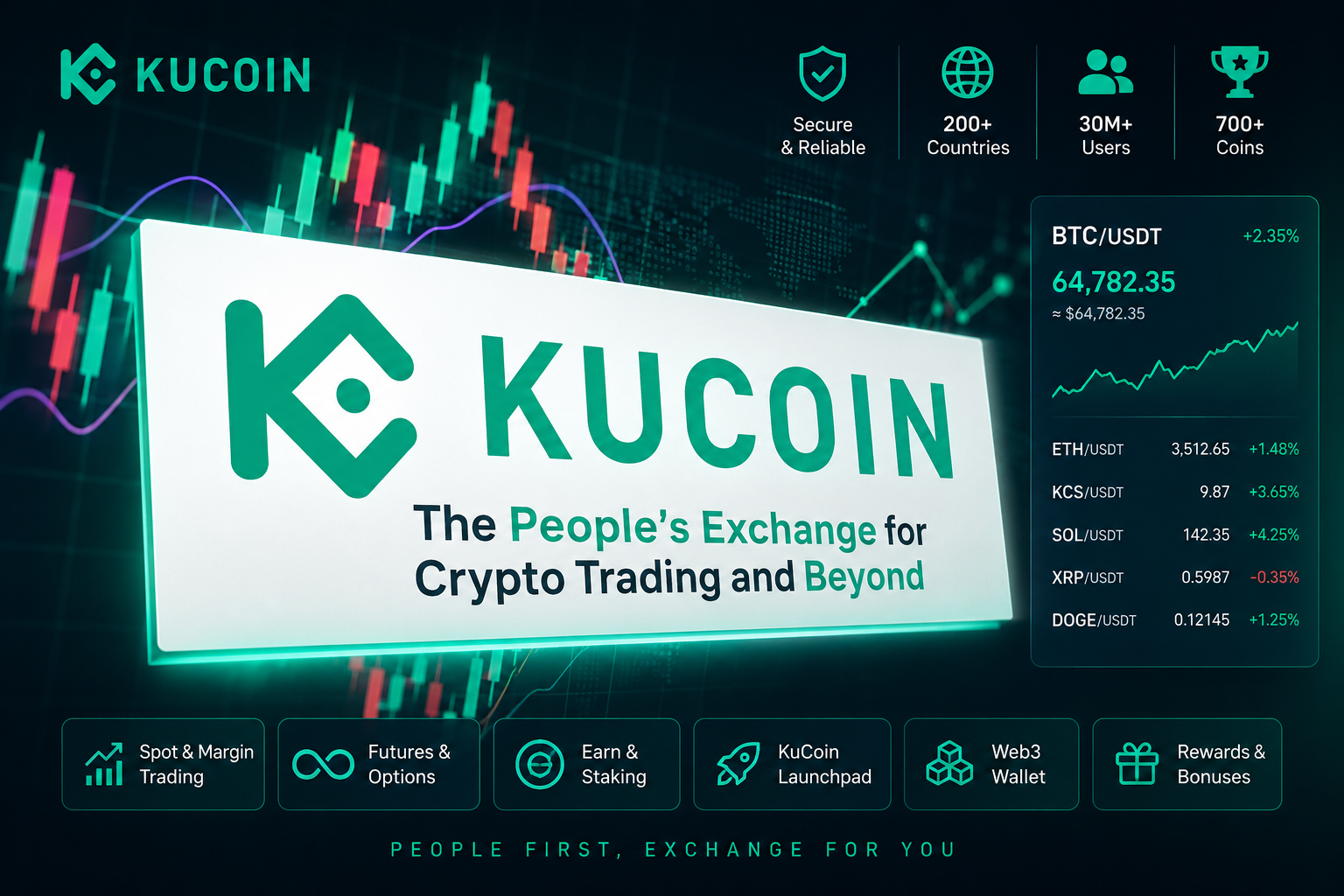
In a cryptocurrency industry crowded with exchanges competing for attention, few have managed to build as distinctive and enduring a brand identity as KuCoin. Since its founding in 2017, KuCoin has embraced a nickname coined organically by its own community: “The People’s Exchange.” That label reflects a specific strategic identity the platform has cultivated over the years — a focus on breadth of asset selection, early access to emerging tokens, accessibility for traders around the world, and a community-first approach to product development.
KuCoin’s journey has not been without turbulence. Like many global cryptocurrency exchanges that grew rapidly during crypto’s early years, KuCoin has had to navigate serious regulatory challenges, including a significant U.S. legal settlement, while working to rebuild trust through greater transparency and compliance investment. Understanding KuCoin today means understanding both its distinctive strengths — particularly its role as a launchpad for altcoins and emerging projects — and the lessons it has learned, often the hard way, about operating a global financial platform under increasing regulatory scrutiny.
This article explores KuCoin’s origins, its distinctive product ecosystem, the challenges it has faced, and where the platform is headed as the broader crypto industry continues to mature. Along the way, it examines what genuinely sets KuCoin apart from its larger and more institutionally focused competitors, why that distinctiveness has resonated so strongly with a specific segment of the global trading community, and what its ongoing regulatory journey suggests about the broader path major cryptocurrency exchanges must walk as the industry moves further into the financial mainstream.
The Origins: Founded to Fill a Gap in the Market
KuCoin was founded in 2017 by a group of blockchain and technology veterans who identified a specific gap in the still-young cryptocurrency exchange landscape: the lack of a platform genuinely dedicated to giving smaller, emerging projects a fair chance at visibility and liquidity. At the time, many of the largest exchanges focused primarily on listing established, high-market-cap cryptocurrencies, leaving smaller and newer projects with limited access to meaningful trading volume and user attention.
KuCoin’s founders bet that there was significant demand — both from traders seeking early access to promising new tokens and from smaller blockchain projects seeking a credible platform to launch on — for an exchange willing to embrace a much broader and more inclusive listing strategy. This bet paid off considerably, and KuCoin quickly built a reputation as one of the go-to platforms for traders looking to discover and trade altcoins well before they achieved listings on larger, more conservative exchanges.
A Community-Driven Identity From the Start
Unlike some exchanges that built their brand primarily around institutional credibility or regulatory pedigree, KuCoin leaned heavily into community engagement from its earliest days. The “People’s Exchange” nickname itself emerged organically from KuCoin’s user base rather than being a formal marketing campaign, reflecting a genuine sense of ownership and loyalty among early adopters who felt the platform was built with their interests — rather than purely institutional interests — in mind.
This community-first ethos has continued to shape KuCoin’s product decisions over the years, from its approach to new token listings to its emphasis on user rewards programs, referral incentives, and active engagement across social media and community forums. It is a positioning that has proven durable precisely because it was never manufactured top-down; the exchange’s ongoing product and communication decisions have consistently reinforced, rather than contradicted, the grassroots reputation its earliest users first attached to it.
Building a Distinctive Product Ecosystem
KuCoin has grown well beyond a simple spot trading platform, developing a broad ecosystem of products designed to serve everyone from casual first-time traders to sophisticated professional investors.
Spot Trading and Altcoin Diversity
KuCoin’s core spot trading platform remains its most defining feature, offering access to hundreds of cryptocurrency trading pairs — a selection considerably broader than many competing exchanges, particularly when it comes to smaller, emerging, and DeFi-focused tokens. This breadth of listings has made KuCoin a particularly popular destination for traders specifically seeking early exposure to new projects before they achieve wider exchange availability, reinforcing the platform’s identity as a discovery-focused exchange rather than one limited to only the most established digital assets.
Futures and Margin Trading
For more advanced traders, KuCoin offers a robust suite of derivatives products, including futures contracts and margin trading, allowing users to take leveraged positions on a wide range of cryptocurrencies. These advanced trading tools have helped KuCoin attract a meaningful base of professional and semi-professional traders alongside its large retail user community, broadening its appeal beyond purely beginner-focused platforms.
KuCoin Earn and Staking Products
KuCoin has developed an extensive suite of passive income products under its “KuCoin Earn” umbrella, allowing users to stake or lend various cryptocurrencies in exchange for yield. These products have become an important part of KuCoin’s broader value proposition, appealing to users who want to generate returns on their existing holdings without needing to actively trade, and reflecting a broader industry-wide shift toward positioning exchanges as more comprehensive financial platforms rather than pure trading venues.
KuCoin Token (KCS) and Ecosystem Utility
KuCoin’s native token, KCS, plays a central role across the platform’s broader ecosystem, offering trading fee discounts, participation in token distribution events, and other platform-specific benefits. Over time, KCS has developed utility extending beyond the core exchange itself, including within KuCoin’s broader blockchain and Web3 initiatives, reflecting a pattern common among major exchanges of building a native token economy that ties user incentives directly to platform growth and engagement.
KuCoin Win and Trading Bots
KuCoin has also invested in tools designed to make more sophisticated trading strategies accessible to everyday users, including built-in trading bots that allow users to automate strategies such as grid trading without needing programming expertise. This focus on democratizing access to more advanced trading techniques reflects KuCoin’s broader philosophy of making powerful financial tools available to as wide a user base as possible, rather than reserving them exclusively for professional traders with dedicated technical resources.
NFT and Web3 Initiatives
Like many major exchanges, KuCoin has expanded into the broader Web3 space, including NFT marketplace features and support for a growing range of blockchain-based digital collectibles and applications. While these initiatives represent a smaller part of KuCoin’s overall business compared to its core trading products, they reflect the platform’s ongoing effort to remain positioned at the center of emerging trends within the broader crypto and blockchain ecosystem.
Global Reach and Accessibility
One of KuCoin’s most defining characteristics has been its emphasis on broad global accessibility, particularly in markets that have historically been underserved by larger, more conservative exchanges.
Serving Emerging Markets
KuCoin has built a particularly strong presence in emerging markets across Asia, Latin America, and other regions where cryptocurrency adoption has grown rapidly but access to established, trusted financial infrastructure has often lagged behind. By offering a broad, accessible platform available in a large number of countries and territories, KuCoin has positioned itself as an important entry point for new crypto users in regions where alternatives may be more limited.
Multi-Language and Localized Support
To support this global user base, KuCoin has invested in localized platform experiences, including multi-language support and region-specific customer service resources, recognizing that genuine accessibility requires more than simply making a platform technically available in a given country — it requires actively removing language and cultural barriers that might otherwise limit adoption among non-English-speaking users.
Navigating a Complex Patchwork of Restrictions
At the same time, KuCoin’s global accessibility exists within an increasingly complex patchwork of jurisdictional restrictions. The platform remains unavailable or restricted in a number of major markets, including the United States, reflecting ongoing regulatory challenges that have required KuCoin to carefully navigate which markets it can serve directly and under what conditions. This dynamic is a common challenge across the broader crypto exchange industry, as regulatory frameworks continue to evolve unevenly across different countries and regions.
Regulatory Challenges: A Necessary Reckoning
No comprehensive account of KuCoin’s history would be complete without addressing the significant regulatory challenges the company has faced, particularly in the United States.
The U.S. Legal Settlement
KuCoin faced a significant legal case in the United States related to operating as an unlicensed money transmitting business, ultimately resulting in a guilty plea and a formal settlement with federal authorities. This outcome represented a serious and consequential moment in the company’s history, underscoring the broader industry-wide challenge facing global exchanges that grew rapidly across many jurisdictions without always securing the specific licenses required in each individual market.
A Trust-Building Response
Following this settlement, KuCoin announced a substantial trust-building initiative aimed at strengthening its security infrastructure, expanding transparency measures, and deepening cooperation with regulators across the jurisdictions in which it operates. This initiative has included an expanded commitment to regular proof-of-reserves reporting, continued investment in compliance staffing, and active pursuit of formal licensing in additional markets, including efforts to meet the European Union’s MiCA regulatory requirements.
KuCoin has also worked to resolve additional outstanding U.S. regulatory matters, including reaching a settlement with the Commodity Futures Trading Commission that addressed some of its remaining domestic legal exposure. Taken together, these steps reflect a broader strategic pivot — similar to patterns seen elsewhere in the industry — toward treating regulatory compliance as a long-term business priority rather than an afterthought.
An Uneven Regulatory Footprint
Despite these efforts, KuCoin’s regulatory standing remains uneven across different jurisdictions. The platform has obtained specific registrations in a number of countries, including virtual asset service provider registration in certain European markets, but continues to operate without full licensing in others, including the United Kingdom, where it currently operates outside direct oversight from the Financial Conduct Authority. This means users in certain jurisdictions may not have access to the same regulatory protections — such as formal dispute resolution mechanisms or compensation schemes — that are available through more comprehensively licensed competitors.
For users evaluating KuCoin, this uneven regulatory picture is an important consideration: the platform has made real, measurable progress toward greater compliance and transparency, but prospective users in more heavily regulated markets should understand that KuCoin’s regulatory standing may differ meaningfully from that of exchanges with more established, comprehensive licensing across major jurisdictions.
Security: Protecting a Massive, Diverse User Base
Given the scale of assets held on the platform and its history of regulatory challenges, security and asset protection have become increasingly central priorities for KuCoin.
Cold Storage and Multi-Factor Protections
KuCoin stores the substantial majority of user funds in cold storage, employs multi-factor authentication, and offers additional account protection tools such as anti-phishing codes and withdrawal address whitelisting, aligning with standard industry best practices for protecting user assets from unauthorized access.
Proof of Reserves
As part of its broader trust-building efforts, KuCoin has expanded its proof-of-reserves reporting, aiming to provide users with greater visibility into the backing of assets held on the platform. This has become an increasingly important trust signal across the exchange industry more broadly, particularly following several high-profile exchange collapses in recent years that severely damaged public confidence in exchange solvency more generally.
Insurance Fund
KuCoin maintains an insurance fund intended to help protect users in the event of security incidents or system failures, though specific details about fund size are not always consistently disclosed publicly. As with any exchange-based protection mechanism, users are generally encouraged to understand that holding assets on any centralized exchange carries inherent counterparty risk, and that self-custody solutions remain the most secure option for users prioritizing long-term asset security above trading convenience.
Independent Security Certifications
KuCoin has pursued independent security certifications, including recognized international information security standards, as part of its broader effort to demonstrate credible, third-party-verified security practices rather than relying solely on internal assurances. These certifications, alongside continued investment in advanced risk monitoring systems, reflect KuCoin’s ongoing effort to rebuild and reinforce user trust following its earlier regulatory setbacks.
KuCoin’s Role in the Broader Altcoin Ecosystem
Beyond its own platform, KuCoin has played a meaningful role in shaping the broader altcoin and emerging-token ecosystem within the cryptocurrency industry.
A Launchpad for Emerging Projects
Through its various token launch and listing programs, KuCoin has provided an important early platform for numerous blockchain projects seeking initial liquidity and visibility. For many smaller projects, achieving a KuCoin listing has historically represented an important milestone on the path toward broader market recognition, reflecting the platform’s continued relevance as a discovery venue within the crowded landscape of new token launches.
Supporting DeFi and Emerging Sectors
KuCoin has consistently maintained a strong focus on listing tokens tied to decentralized finance and other emerging sectors within the broader crypto industry, often providing trading access to promising projects well before they achieve listings on more conservative, established exchanges. This willingness to embrace emerging trends earlier than some competitors has reinforced KuCoin’s identity as a platform genuinely oriented toward discovery and early access, rather than one focused exclusively on already-established, blue-chip digital assets.
Balancing Opportunity and Risk
At the same time, this openness to early-stage token listings carries inherent trade-offs. Emerging and smaller-cap tokens generally carry significantly higher volatility and risk than established cryptocurrencies, and users trading on platforms like KuCoin that prioritize breadth of listings should understand that early access to promising projects also means early exposure to projects that may ultimately fail to gain lasting traction. This risk-reward dynamic is central to understanding KuCoin’s specific niche within the broader competitive exchange landscape, and it is one reason experienced traders often treat KuCoin’s altcoin listings as a starting point for further research rather than an implicit endorsement of any individual project’s long-term viability.
How KuCoin Compares to Major Competitors
KuCoin’s specific strategic identity becomes clearer when compared to its closest competitors in the global exchange market. Where platforms like Coinbase have built their reputation primarily around regulatory compliance, public company transparency, and beginner accessibility within well-regulated markets, and Binance has competed primarily on sheer global scale and product breadth, KuCoin has carved out a somewhat different niche: a platform specifically known for altcoin diversity, early token access, and a strong community-driven identity, even as it continues working to strengthen its regulatory standing.
This positioning has made KuCoin particularly attractive to traders specifically seeking broader token selection and early access to emerging projects, while making it a less natural fit for users whose primary priority is operating exclusively within the most heavily regulated, institutionally focused segment of the exchange market. Understanding this distinction is important for anyone evaluating which exchange best fits their specific trading priorities and risk tolerance.
Designing for Different Types of Traders
KuCoin’s product philosophy has consistently emphasized serving a wide spectrum of user types, from complete beginners taking their first steps into crypto trading to highly active professional traders managing complex, multi-asset portfolios.
Beginner-Friendly Onboarding
For new users, KuCoin has invested in simplifying the account creation and initial funding process, offering multiple deposit methods and a guided interface designed to reduce the friction that has historically made cryptocurrency exchanges intimidating for first-time users. This focus on accessible onboarding has been an important factor in KuCoin’s ability to attract new users in emerging markets, where many traders may be interacting with a cryptocurrency exchange for the very first time.
Tools for Active and Professional Traders
At the other end of the spectrum, KuCoin offers a range of tools designed for more experienced and professional traders, including advanced charting features, API access for algorithmic trading strategies, and deep liquidity across its most actively traded pairs. This dual focus — remaining approachable for newcomers while still offering the depth professional traders expect — has been central to KuCoin’s ability to retain a broad and diverse user base rather than skewing heavily toward a single trader segment.
Mobile-First Accessibility
Recognizing that a substantial share of its global user base accesses crypto markets primarily through mobile devices, KuCoin has placed significant emphasis on the functionality and reliability of its mobile application, ensuring that core trading, staking, and account management features remain fully accessible outside of the desktop experience. This mobile-first approach has proven especially important in regions where mobile devices represent the primary, or even sole, means of accessing financial services and the broader internet.
Fee Structure and Cost Competitiveness
Fee competitiveness has remained an important part of KuCoin’s overall value proposition, particularly for active traders comparing costs across multiple exchanges.
Tiered Fee Discounts
KuCoin employs a tiered fee structure that rewards higher trading volume and KCS token holdings with progressively lower trading fees, incentivizing user loyalty and encouraging deeper platform engagement over time. This structure is broadly consistent with fee models used across much of the exchange industry, though KuCoin has generally positioned its baseline fees competitively relative to other major global exchanges, reinforcing its broader positioning as an accessible, cost-conscious platform for active traders.
Reduced Costs Through Native Token Utility
By allowing users to pay trading fees using KCS at a discounted rate, KuCoin has created a direct incentive for active traders to hold and use its native token, reinforcing the broader token utility model common across major exchanges while giving cost-conscious traders a meaningful way to reduce their overall trading expenses.
Customer Support and Community Engagement
Beyond its product offerings, KuCoin has invested significantly in building direct relationships with its user community, an approach consistent with its broader “People’s Exchange” identity.
Multi-Channel Support
KuCoin offers customer support across multiple channels, including live chat, ticketing systems, and an extensive help center covering common account, trading, and security questions. For a platform serving users across such a wide range of countries and languages, maintaining responsive, accessible support has remained an ongoing operational priority, particularly as the platform has worked to rebuild trust following its regulatory challenges.
Community Programs and Ambassador Networks
KuCoin has cultivated active community programs, including ambassador and content-creator initiatives that reward users for contributing educational content, translations, and local market expertise. These programs have helped KuCoin maintain a strong grassroots presence in numerous regional markets, reinforcing the platform’s community-driven reputation while also helping bridge language and cultural gaps that might otherwise limit adoption among non-English-speaking users.
Transparency in Communication
As part of its post-settlement trust-building efforts, KuCoin has placed increased emphasis on proactive communication with its user base regarding security updates, regulatory developments, and platform changes. This shift toward more consistent and transparent communication reflects a broader recognition, shared across much of the exchange industry, that maintaining user trust requires not just strong technical infrastructure, but a genuine ongoing dialogue with the community the platform ultimately serves.
Looking Ahead: What’s Next for KuCoin
Several key trends appear likely to shape KuCoin’s continued evolution in the years ahead.
Continued regulatory investment seems likely to remain a top priority, as KuCoin works to expand its formal licensing footprint across additional jurisdictions, building on its post-settlement trust-building initiative and its progress toward meeting European MiCA requirements.
Expanded transparency measures, including more frequent and detailed proof-of-reserves reporting, are likely to continue as KuCoin works to rebuild and reinforce user trust following its earlier regulatory challenges.
Continued emphasis on altcoin diversity appears likely to remain central to KuCoin’s core identity, even as the platform balances this openness against growing pressure to demonstrate more rigorous listing standards and risk disclosure practices.
Growth of passive income and automated trading tools seems likely to continue, as KuCoin builds out its Earn and trading bot offerings to appeal to users seeking more hands-off ways to engage with the platform.
Deeper Web3 and ecosystem integration may continue as well, as KuCoin looks to maintain relevance amid an increasingly crowded and competitive landscape of exchanges expanding into decentralized finance, NFTs, and broader blockchain infrastructure.
Whatever specific direction these developments take, KuCoin’s underlying identity as “The People’s Exchange” — built around accessibility, altcoin diversity, and a strong community connection — appears likely to remain central to its strategic positioning, even as the platform continues working to align that identity with an increasingly demanding global regulatory environment.
Frequently Asked Questions
What makes KuCoin different from other major cryptocurrency exchanges? KuCoin is particularly known for its broad selection of altcoin and emerging-token listings, offering traders early access to smaller and newer projects that may not yet be available on more conservative, established exchanges, alongside a strong community-driven brand identity.
Is KuCoin available in the United States? KuCoin operates without full U.S. regulatory registration and has faced legal challenges in the United States related to operating as an unlicensed money transmitting business, resulting in a formal settlement. Users in the United States should carefully research current access restrictions before using the platform.
What is KCS? KCS is KuCoin’s native token, offering benefits such as trading fee discounts and participation in platform-specific programs, with utility extending into KuCoin’s broader ecosystem initiatives.
How has KuCoin responded to its past regulatory challenges? Following its U.S. legal settlement, KuCoin launched a substantial trust-building initiative focused on strengthening security, expanding proof-of-reserves transparency, and pursuing formal regulatory licensing in additional jurisdictions, including progress toward meeting European MiCA requirements.
Is KuCoin safe to use? KuCoin employs standard industry security measures, including cold storage, multi-factor authentication, proof-of-reserves reporting, and independent security certifications. However, as with any centralized exchange, users should understand the inherent counterparty risk involved in holding assets on any third-party platform.
Does KuCoin offer passive income products? Yes. Through its KuCoin Earn suite of products, users can stake or lend a variety of cryptocurrencies to generate yield, in addition to accessing built-in trading bots designed to automate certain trading strategies.
Conclusion
KuCoin’s journey from a scrappy 2017 startup to one of the world’s most feature-rich cryptocurrency exchanges reflects both the tremendous opportunity and the significant challenges inherent in building a truly global crypto platform. Its “People’s Exchange” identity — rooted in altcoin diversity, accessibility, and genuine community engagement — has helped the platform carve out a distinctive and enduring niche within an increasingly crowded competitive landscape, even as more institutionally focused competitors have pursued a different strategic path centered on regulatory pedigree above all else.
At the same time, KuCoin’s regulatory history serves as an important reminder that rapid global growth, if not matched by equally rigorous compliance infrastructure, carries real and lasting consequences. The platform’s response to its past challenges — a substantial trust-building initiative, expanded transparency measures, and active pursuit of formal licensing across additional markets — suggests a genuine effort to evolve beyond those early missteps, even as meaningful work remains, particularly in achieving more comprehensive regulatory standing in some of the world’s most heavily regulated markets.
What ultimately distinguishes KuCoin’s story from that of many other global exchanges is the specific combination of grassroots community identity and hard-earned regulatory humility now shaping its next chapter. Few platforms have had to reconcile a genuinely bottom-up, user-driven brand with the top-down compliance demands of a maturing global financial system quite as visibly as KuCoin has in recent years, and how successfully it continues to manage that balance will likely shape its competitive standing for years to come.
As the broader cryptocurrency industry continues its gradual convergence with traditional finance, KuCoin’s ability to balance its core identity as an accessible, altcoin-friendly platform with the increasingly rigorous compliance expectations of a maturing industry will likely determine how successfully it continues living up to the nickname its own community gave it. For now, “The People’s Exchange” remains an apt description of a platform built, from its earliest days, around the idea that crypto trading should be broadly accessible — even as it works to prove that accessibility and accountability can ultimately go hand in hand.